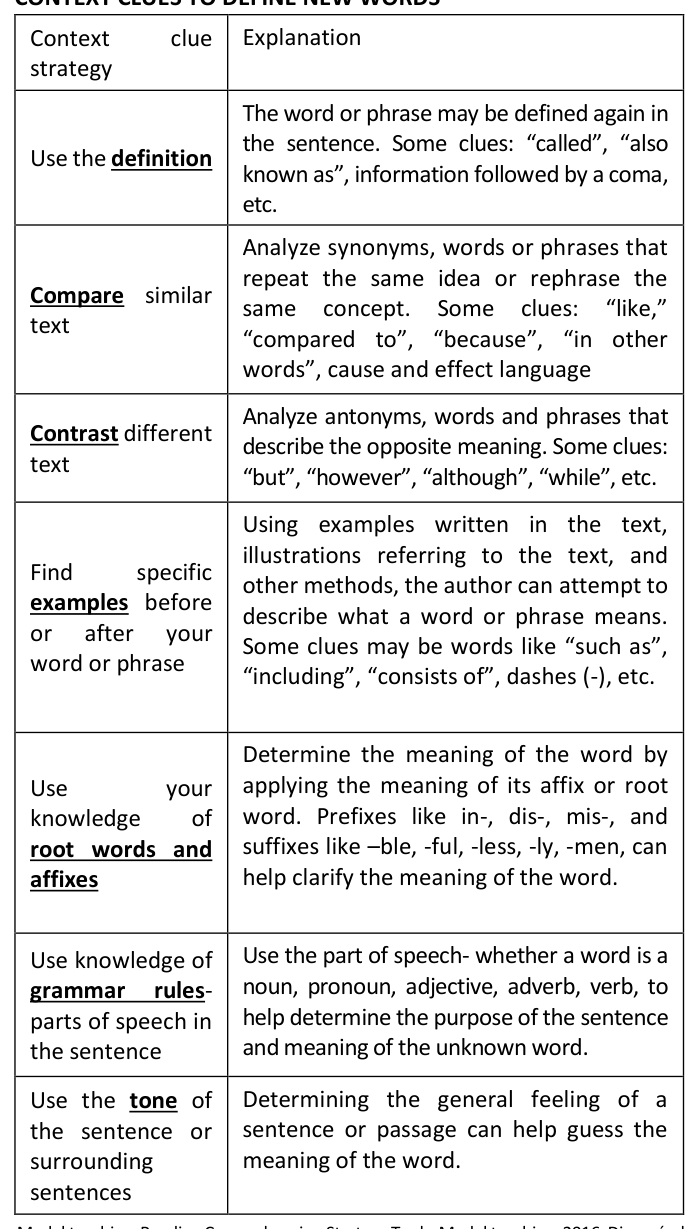
Texto contido na figura (extraído automaticamente do PDF): Context clue strategy Explanation Use the definition The word or phrase may be defined again in the sentence. Some clues: “called”, “also known as”, information followed by a coma, etc. Compare similar text Analyze synonyms, words or phrases that repeat the same idea or rephrase the same concept. Some clues: “like,” “compared to”, “because”, “in other words”, cause and effect language Contrast different text Analyze antonyms, words and phrases that describe the opposite meaning. Some clues: “but”, “however”, “although”, “while”, etc. Find specific examples before or after your word or phrase Using examples written in the text, illustrations referring to the text, and other methods, the author can attempt to describe what a word or phrase means. Some clues may be words like “such as”, “including”, “consists of”, dashes (-), etc. Use your knowledge of root words and affixes Determine the meaning of the word by applying the meaning of its affix or root word. Prefixes like in-, dis-, mis-, and suffixes like –ble, -ful, -less, -ly, -men, can help clarify the meaning of the word. Use knowledge of grammar rules- parts of speech in the sentence Use the part of speech- whether a word is a noun, pronoun, adjective, adverb, verb, to help determine the purpose of the sentence and meaning of the unknown word. Use the tone of the sentence or surrounding sentences Determining the general feeling of a sentence or passage can help guess the meaning of the word.
Model teaching. Reading Comprehension Strategy Tools. Model teaching, 2016. Disponível em: https://www.modelteaching.com/education-articles/reading-ela-instruction/reading- comprehension-strategy-tools. Acesso em: 12 jul. 2024. Adaptado. Em uma atividade de leitura do texto “Bigger Isn’t Always Better: Narrow Traffic Lanes Make Cities Safer”, os alunos tiveram dificuldade de interpretação do último período por não saberem o sentido do termo ‘narrower’. Sobre isso, analise as estratégias: I. Procurar a definição do termo em um dicionário inglês-português.
II. Procurar por dicas na imagem que acompanha o artigo. III. Identificar o sentido dos termos ‘bigger’ e ‘wider’.
IV. Identificar a classe gramatical do termo e o sentido do sufixo -er.
Com base na tabela fornecida, para que os alunos possam entender o sentido do termo (‘narrower’) pelo contexto, o professor deve orientar que eles adotem as seguintes estratégias:
Observações: contém figura recortada do PDF; descrição da imagem pendente de preenchimento humano